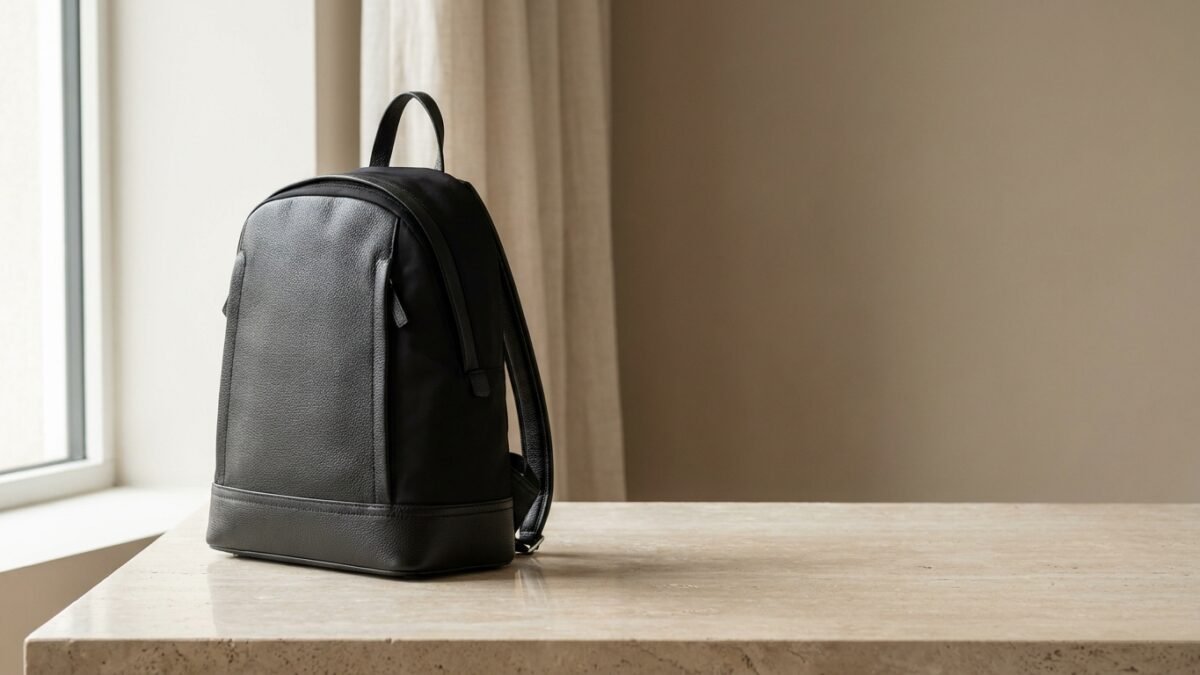
A women’s backpack bag base essential fashion choice comes down to a bottom panel that holds its shape, a size that matches what you carry, and a fit that does not strain your back. Backpacks are now an everyday style piece, but the base is the part that decides whether the bag stays upright and keeps looking good after months of use. This guide explains what the base does, how to judge one, how to carry the bag comfortably and how to clean it. It also points out where popular product pages claim more than they can prove.
Women’s backpack bag base essential fashion: what the base actually does
The base is the bottom panel of a backpack, and its job is to keep the bag upright, take the scuffs of being set down and shield the contents from rough or damp surfaces. Sports retailers describe reinforced bottoms in similar terms, and Jeune Premier, a bag brand, says the coated polyester panel on its backpacks keeps them standing. A bag without that extra layer relies on its main fabric alone, so a lightly built one may slump sideways on a café floor.
Structure and style are linked. Louis Vuitton’s product guidance says structured panels help a bag keep its shape, and it notes that its canvas backpacks are often finished with leather trim at the base. A firm bottom gives the silhouette a cleaner line, which tends to look smarter next to tailoring than a bag that sags.
How backpacks became a fashion essential
Backpacks moved from school and hiking gear into everyday fashion over several decades, and the moment most often cited is Prada’s nylon backpack of 1984. Miuccia Prada made it from a water-resistant nylon called Pocono, and W Magazine describes the plain, practical choice as a deliberate answer to an era of showy luxury. Accounts of the fabric’s origin differ, with Harper’s Bazaar UK and others saying it was used for Italian military tents and some sources saying parachutes, so either version is reported rather than confirmed.
Prada revisited the idea in 2019 with its Re-Nylon line, which W Magazine says uses material made from discarded fishing nets and textile waste. Prada says the regenerated nylon can be recycled indefinitely, a claim from the brand that was not independently verified here. In the story of women’s backpack bag base essential fashion, this episode shows that durable, practical materials and polished style were never opposites.
Choosing a base: materials and construction
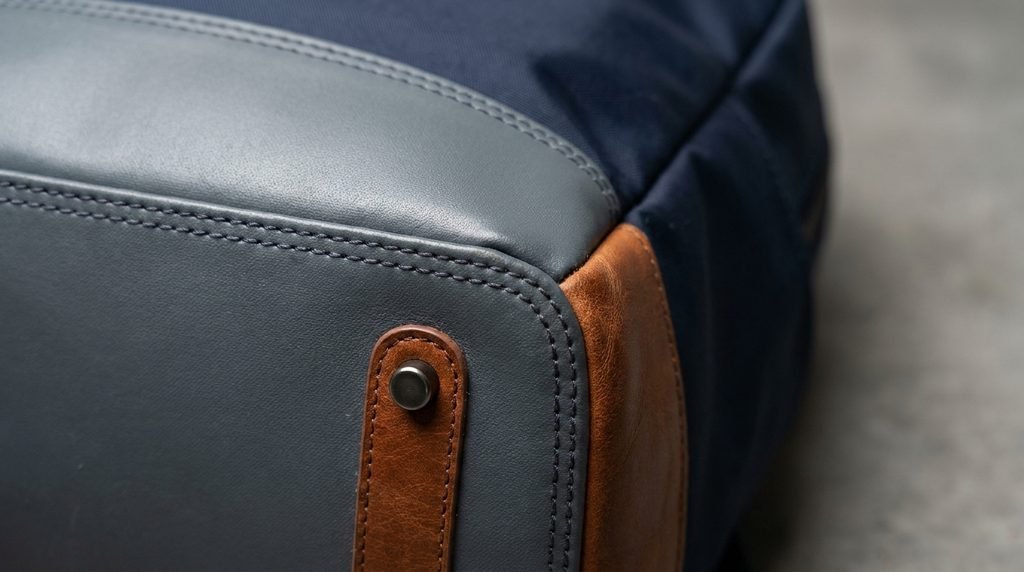
Look for a base that is a deliberate, reinforced part of the bag rather than the same single layer of fabric used everywhere else. The reinforcement can be a thicker or coated fabric panel, a hard molded shell or leather trim, and each trades weight against stiffness. One review site focused on hard-bottom backpacks frames the main choice as a stiff molded shell that resists deformation versus a reinforced canvas base that is lighter but less rigid. Those are one site’s opinions, partly drawn from customer reports, not tested standards, so treat them as things to inspect rather than guarantees.
| Base type | What it gives you | What to watch |
|---|---|---|
| Plain fabric base | The lightest feel | May slump when set down because nothing extra supports it |
| Reinforced fabric or coated panel | Helps the bag stand upright and take scuffs | Quality varies, so check the seams and how thick the panel feels |
| Hard molded shell | Resists deformation under load, according to hard-bottom reviewers | Adds weight, and is mostly seen on work and tool packs |
| Leather trim at the base | A dressier finish that suits structured bags | Collects dirt along seams and needs leather-specific care |
| Added feet or studs | Keep the base off wet or dirty ground | Sold as hardware for bag makers and common on tool bags |
Fabric strength is often quoted in denier, a measure of yarn thickness. One backpack brand’s buying guide says panels range from about 210D for lighter areas to 600D or higher on the high-wear base, and that seams stretching white under normal load or a fraying bottom suggest the fabric is not rated for daily use. A higher number usually means thicker yarn but does not guarantee quality, because weave, coating and stitching matter too, and none of the sources checked gives a confirmed threshold for a good fashion backpack base. When shoppers compare women’s backpack bag base essential fashion options, the base is rarely the first thing they inspect, yet pressing it and checking how it is stitched to the sides says more than a marketing phrase.
Which size and shape suit everyday carrying?
A compact but structured bag suits most daily use, according to Michael Kors’ guidance on women’s backpacks, which adds that the right size depends on intended use. Louis Vuitton offers a practical scale: a mini backpack suits a phone, compact wallet, keys and earphones, while a medium one can take a tablet, a long wallet and a few more items. It advises checking product dimensions, the opening and the internal layout rather than judging capacity from the outside. For workdays that need a laptop or a wide opening, it points shoppers toward tote bags instead.
Comfort, load and posture
A backpack feels comfortable when it sits close to the back, is not wider than your torso and carries only what you need that day. ATI Physical Therapy, a US clinic group, says the pack should fit snugly to reduce swaying and friction, and the American Academy of Orthopaedic Surgeons (AAOS) says heavy backpacks can be a source of back, neck and shoulder pain in adolescents and adults. The AAOS also advises carrying only the items required for the day.
Style and comfort can pull against each other in any women’s backpack bag base essential fashion decision, which is why the load matters as much as the look. Published weight limits vary: for adults, sources range from about 10 to 15 percent of body weight (ATI) up to roughly one-third (a hunting-and-hiking guide on the NRA family site), and no single number is agreed. The AAOS range of 10 to 15 percent is aimed at children, so it should not be read as an adult rule.
Good Morning America reported a computer-modelling study by Hansraj and colleagues that estimated the force on a spine in a neutral position at about 7.2 times the weight of the backpack, rising to 11.6 times when slumped forward about 20 degrees. That is a model rather than a measurement on people, so it works best as a reminder that extra weight can matter more than it feels. Persistent numbness, tingling or pain while wearing a bag is worth raising with a doctor or physiotherapist, and the AAOS notes in its guidance for parents that such symptoms can point to poor fit or too much weight.
Caring for a women’s backpack bag base essential fashion piece
Clean the bottom first and most often, because dirt builds up there and in the lower corners. For nylon and polyester bags, CNN Underscored’s guide suggests focusing stain treatment on the handles and bottom corners, and Nike’s care advice says most nylon bags tolerate a gentle cold-water cycle with a little bleach-free detergent while canvas should avoid the dryer because it can shrink. Nike also stresses checking the care label first, since leather accents and other materials can change what is safe.
Leather bases need gentler handling. Backpackies’ guide recommends brushing loose dirt off the seam lines and bottom first, then using a cleaner made for purses or boots, and it warns that conditioners made for saddles can stain. Emptying the bag first matters too, because debris left on the surface can scratch leather during cleaning, according to Yukon’s guide.
Storage affects the base as much as cleaning does. Louis Vuitton recommends taking tablets and heavier belongings out after use so the base, straps and back panel can recover, and storing the bag lightly filled with straps lying flat and hardware kept away from leather or canvas.
Common mistakes and misconceptions
The most common mistakes are treating the word reinforced as a guarantee and trusting generic product copy. Reinforced does not mean waterproof: retail pages say reinforced bottoms protect against moisture and wear, but none of the ones checked gives a water-resistance rating or names the coating, so the claim cannot be verified from the listing alone. A bag described as water-resistant is also not the same as a waterproof one, so wet-weather use is worth confirming with the brand.
Search results for women’s backpack bag base essential fashion queries are crowded with retailer category pages that repeat near-identical lines, along with affiliate-style lists. Some pages mix in unrelated links or spam text, and claims such as a base surviving two or more years of daily use come from customer comments rather than lab tests. Brand pages are useful for dimensions and materials, but their praise for their own products is marketing, not independent testing.
Frequently asked questions
Are women’s backpacks still in style?
Yes, according to Michael Kors, which says women’s backpacks have evolved with modern fashion and look city-ready with tailored outerwear or sleek sneakers. Luxury London’s autumn roundup names labels from The Row to Saint Laurent and Mulberry as all being in the category.
Is it safe to carry a backpack on one shoulder?
Orthopaedic guidance points the other way. The AAOS advises always using both wide, well-padded straps because they spread the weight more evenly across the back, and a local newspaper explainer also advises against hanging a bag from one shoulder. Neither source gives a time limit, so there is no confirmed safe duration.
Can I add feet or studs to a finished backpack?
Feet and studs are fitted by punching a small hole through the base and screwing them on, according to hardware supplier Sailrite, which sells them for bag-making and leatherwork. That suits handmade projects better than a finished designer backpack, and none of the sources checked says the modification is advisable for factory-made bags.
Which suits which outfit, leather or canvas?
Louis Vuitton says a leather backpack works naturally with tailoring, knitwear and structured outerwear, while canvas styles suit denim, trainers and travel wardrobes. Both come in mini and medium sizes, so the choice is mostly about the rest of your wardrobe.
How often should a leather backpack be cleaned and conditioned?
Backpackies suggests every few months, saying regular care helps prevent the brittleness that leads to cracking. A distinct odour or discolouration can indicate mould, which Nike’s care advice treats by wiping with a wet towel and then deep cleaning with a leather cleaner.
Choosing with the bottom in mind
A women’s backpack bag base essential fashion purchase is easiest to get right when you turn the bag over and inspect the bottom before the logo. The best ones look as if they were built to be set down, scuffed and picked up again. They also still sit well next to a blazer.
Disclaimer: This article is general information, not medical, legal or financial advice. Load and posture guidance varies between sources, so if you have persistent back, neck or shoulder pain, speak to a doctor or physiotherapist. Brands are mentioned for context only, and product details and prices change, so check the retailer’s current specifications before buying.
Explore More
What Is Sustainable Fashion? A Clear and Honest Guide for 2026

Sandra D. Booth is the founder and editor of Fiora Magazine. She started the magazine because she believes fashion is more than clothing: it is a way to express creativity and confidence. Sandra writes about fashion trends, style guides, beauty, and the people behind modeling and editorial photography, with a focus on honest, practical advice that readers can actually use.